Whether you're stepping into the saddle for the very first time or you've been riding for a few seasons, the Texas Hill Country has a way of humbling every rider. The rolling terrain around Liberty Hill is beautiful — and unforgiving if you show up without the right habits. At Liberty Hill Equestrian Experience (LHEE), we see the same horseback riding mistakes repeated week after week, from nervous first-timers gripping the reins too tight to well-meaning parents who signed their kids up without thinking through the basics first.
This guide exists to change that. Below, you'll find every significant mistake we've watched riders make here in Central Texas — and exactly how to correct each one before it becomes a dangerous habit. Bookmark this page, share it with your riding group, and come back to it before every lesson or trail excursion.
Why Getting the Basics Right Matters More Than Anything Else
A lot of new riders assume that the physical act of sitting on a horse is the hard part. It isn't. The real challenge is building a communication channel with a 1,200-pound animal that reads your body language far faster than your brain sends conscious signals. When your posture is off, your grip is wrong, or your emotional state is anxious, the horse knows before you do.
That's not dramatic — it's just equine biology. Horses are prey animals. They are hardwired to detect subtle changes in weight distribution, breathing patterns, and muscle tension. Every mistake you make in the saddle sends a signal. The question is whether that signal says "confident, trustworthy rider" or "something is wrong here."
Getting fundamentals right from the start — ideally under qualified instruction — is the single best investment any rider can make. If you're in the Liberty Hill area, a structured program like our Youth Horse Riding Lessons builds those fundamentals systematically rather than hoping trail exposure will do the job.
Mistake #1: Skipping the Pre-Ride Ground Work
New riders often want to jump straight into the saddle. That eagerness is understandable, but rushing past groundwork is one of the most common — and preventable — horseback riding mistakes to avoid in Liberty Hill or anywhere else.
What Proper Groundwork Looks Like
- Approaching the horse calmly from the left shoulder, not head-on
- Running your hand along the horse's neck and back before mounting
- Checking girth tightness — always, every ride, no exceptions
- Walking the horse briefly on a lead rope to assess its energy level that day
- Observing ears, tail, and eyes for signs of stress or discomfort
Groundwork isn't a formality. It tells you whether the horse is calm, whether the tack fits correctly, and whether today is the right day for an ambitious ride or a quiet one. Our Horsemanship & Grooming Lessons at LHEE teach riders exactly how to read these signals, turning a pre-ride checklist into genuine equine intuition.
Mistake #2: Holding the Reins Too Tightly
Walk into any beginner group and you'll spot this instantly: white knuckles, rigid forearms, and a horse that's tossing its head or bracing against the bit. Over-gripping the reins is the number-one mechanical error we correct in our first session with new students.
Horses are incredibly sensitive in the mouth. The bit transmits pressure, and when a rider clamps down in fear or uncertainty, the horse feels constant conflicting signals. It doesn't know whether to stop, slow, or turn — so it often does nothing, or gets frustrated and escalates.
The "Egg Rule" for Rein Pressure
A simple mental cue that works for riders of any age: imagine you're holding a raw egg in each hand. Grip firm enough that it won't drop — but not so firm that it cracks. Your contact should be steady, elastic, and responsive, never rigid. Practice this while stationary before you ever ask the horse to move.
If over-gripping is already a habit you're trying to break, University of Georgia Extension's horse safety resources offer research-backed guidance on proper contact and rein mechanics.
Mistake #3: Poor Posture and an Unbalanced Seat
Slouching, leaning forward, or sitting too far back — bad posture costs you balance and communication simultaneously. When your seat bones aren't evenly weighted in the saddle, the horse compensates by shifting its own balance, which makes the ride harder for both of you.
The Alignment Every Rider Needs
- Ear, shoulder, hip, heel: These four points should fall in a straight vertical line when viewed from the side
- Heels down: Driving your heel toward the ground lowers your center of gravity and prevents your foot from slipping through the stirrup
- Shoulders back and relaxed: Not military-stiff — think "proud but soft"
- Core engaged: You should be able to absorb the horse's movement through your lower back and hips, not your clenched thighs
- Eyes up: Look where you're going, not down at the horse's neck
Posture issues are almost impossible to self-correct without feedback. A qualified instructor watching you ride will spot compensations that a mirror — or a well-meaning friend — simply won't catch. This is one reason we structure our lessons around consistent coaching rather than open-ride sessions.
Mistake #4: Wearing the Wrong Gear
Every season in the Hill Country, we see riders show up in flip-flops, ballet flats, or sneakers with no heel. This isn't a fashion critique — it's a safety issue. A foot that slips through a stirrup during a spook is the setup for a dragging accident, which is among the most dangerous incidents in equestrian sport.
The Non-Negotiable Gear List for Liberty Hill Riders
- Certified helmet: ASTM/SEI-rated equestrian helmets only — bicycle helmets do not meet impact standards for riding falls
- Boots with a heel: At least a 1-inch heel to prevent foot slip; western or paddock boots are both appropriate
- Long pants: Protects inner leg from stirrup leather and saddle friction
- Gloves (optional but smart): Especially on trail rides where a spooked horse might pull the reins hard
- Snug-fitting shirt: Loose fabric can catch on tack
Texas summers are real. We understand the impulse to ride in shorts and sandals when it's 97 degrees outside. The answer is breathable riding tights and ventilated helmets — not abandoning safety standards. For families enrolling children, the American Horse Shows Association publishes current helmet certification guidelines worth reviewing before you buy.
Mistake #5: Ignoring the Horse's Body Language
This is the mistake that separates riders who stay safe from riders who have preventable accidents. Horses communicate constantly — with their ears, eyes, tail, nostrils, and overall muscle tension. A rider who isn't watching those signals is essentially driving with their eyes closed.
Key Signals and What They Mean
- Ears pinned flat: Annoyance or aggression — back off whatever you just did
- Whites of eyes showing: Fear or high alertness — something has the horse's attention and not in a good way
- Tail swishing rapidly: Irritation, often with the rider's leg position or pressure
- Head tossing: Usually rein pressure that's too strong, bit discomfort, or back pain
- Ears forward, relaxed jaw: Alert and curious — typically a good working state
- Licking and chewing: The horse is relaxing and processing — a positive sign
Learning to read these cues takes time and guided experience. Our Horsemanship & Grooming Lessons specifically teach horse behavior and body language alongside hands-on grooming — because understanding the animal on the ground makes you a dramatically safer rider in the saddle.

Mistake #6: Rushing Transitions and Movements
One of the most telling signs of an inexperienced rider is abrupt transitions: lurching from a halt to a canter, or suddenly hauling back to a stop from a trot. Horses are creatures of rhythm. Abrupt changes of pace confuse them, unbalance them, and — with a reactive horse — can trigger a bolt or a buck.
Smooth transitions are the hallmark of a skilled rider, and they're trained, not natural. Think of it this way: you wouldn't stomp the gas pedal from a red light or slam the brakes from highway speed if you cared about the passenger next to you. Same principle applies in the saddle.
Building Better Transitions
- Prepare the horse 2-3 strides before you want the transition — shift your weight subtly, organize your reins
- Use a quiet voice cue paired with a gentle leg or seat aid
- Allow the transition to happen over 1-2 strides rather than demanding it instantly
- Follow through with your seat — don't freeze up when the horse changes gait
- Reward with a release of pressure the moment the horse responds correctly
Mistake #7: Letting Fear Run the Ride
Fear is normal. Even experienced riders get nervous around a new horse or on unfamiliar terrain in the Hill Country. The mistake isn't feeling afraid — it's letting that fear express itself through your body without managing it.
When you tense up, your legs grip tighter, your reins shorten, your breathing gets shallow, and your core locks. That full-body message gets transmitted directly to the horse beneath you, and nervous energy is contagious to a prey animal. The horse that was perfectly calm a moment ago is now picking up on something it doesn't understand — and it will react accordingly.
Practical Fear Management for Riders
- Breathe deliberately: Exhale fully and slowly. Your horse's nervous system literally synchronizes with yours.
- Scan your body: Where are you holding tension? Release your jaw, your shoulders, your thighs, one at a time.
- Return to basics: When anxious, slow down the task — go back to walk, shorten your goals for that ride.
- Talk to your instructor: A good instructor adjusts the lesson plan to match your state of mind, not a rigid curriculum.
Our lead instructor Aarica Fitch brings a Masters Level Educator's approach to this — meeting each student where they are emotionally before asking anything physically demanding. That's not soft; it's effective. Confidence in the saddle is earned progressively, not forced.
Mistake #8: Not Matching Horse to Rider Skill Level
This mistake is most often made by parents booking experiences online, not by the riders themselves. A horse that's perfectly suitable for an intermediate teen is potentially dangerous for a five-year-old on their first outing. And a small, calm school horse that's ideal for beginners will bore and frustrate an accomplished junior rider.
Reputable programs match horses to riders based on age, experience, physical ability, and emotional temperament — not just availability. When you're searching for lessons or excursion packages near Liberty Hill, ask specifically how the program matches horses to participants. If no one asks you about prior riding experience before handing you a horse, consider that a serious red flag.
Families considering options for children should explore our Little Riders Program, which is purpose-built for younger children with appropriately sized horses, smaller class groups, and a curriculum designed around developmental stages rather than adult riding norms.
Mistake #9: Skipping the Post-Ride Cool-Down
Most riders think the ride ends when they dismount. It doesn't. What happens in the fifteen to thirty minutes after you step out of the saddle matters for the horse's long-term health and your developing horsemanship skills equally.
A Simple Post-Ride Routine
- Walk the horse in hand for 5-10 minutes if the ride was strenuous — don't untack a horse that's still breathing hard
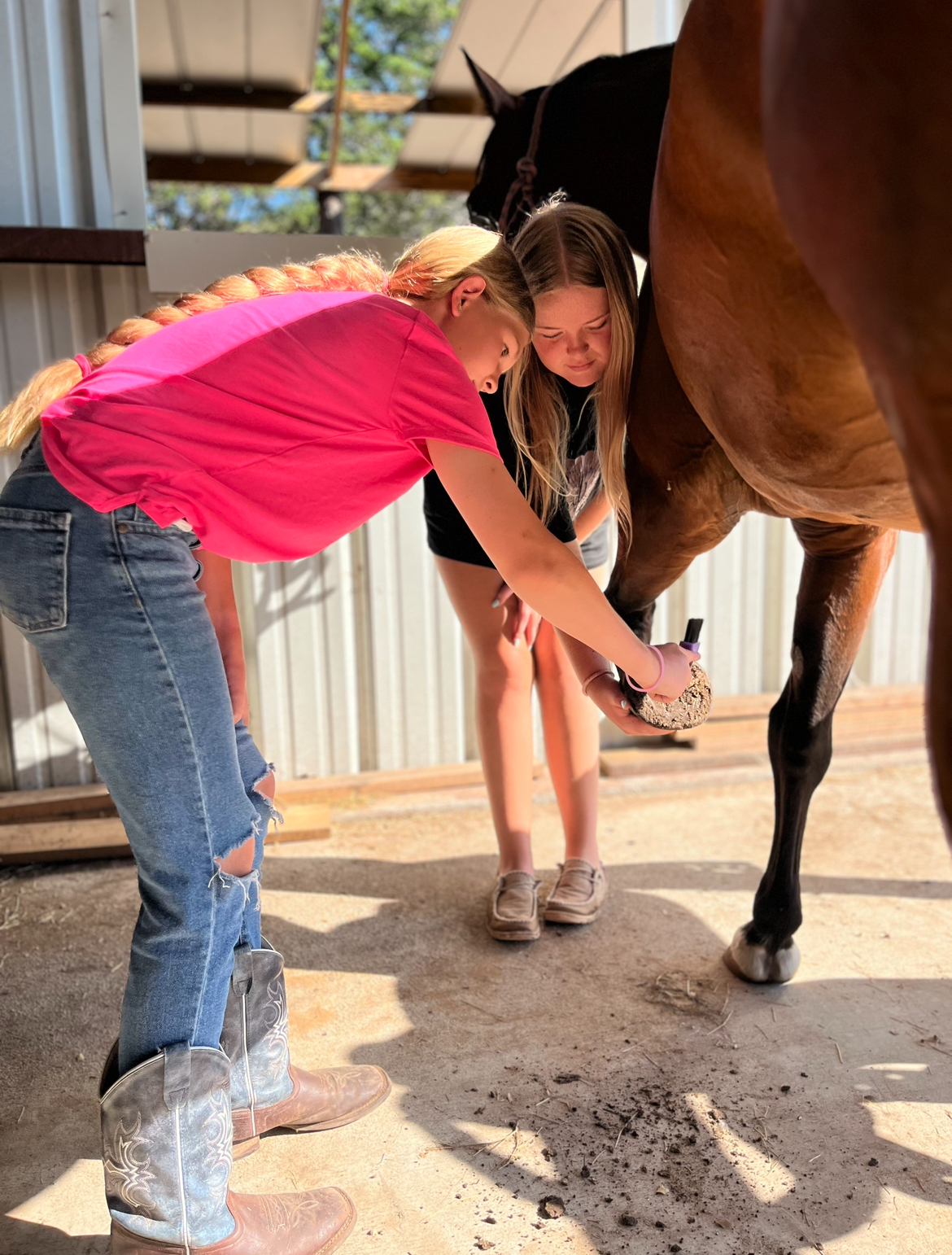
- Check the horse's legs and hooves for any heat, swelling, or lodged debris
- Remove the saddle and inspect the back for any rub marks or dry spots under where the saddle pad sat
- Offer water — always fresh, never ice cold immediately after hard work
- Brush down the horse and check for any cuts or skin irritation
- Return tack to its proper place, clean, and check for wear
These habits teach riders that horses are living partners, not equipment. That mindset shift is exactly what we build through structured Horsemanship & Grooming Lessons — and it's why our students develop deeper, safer relationships with their horses than riders who only show up for the saddle time.
Mistake #10: Treating Every Horse Like the Last One You Rode
Every horse is an individual. The bay quarter horse you rode last summer at summer camp had his own quirks, sensitivities, and communication style. The mare you're tacking up today has entirely different ones. A rider who assumes all horses respond identically to the same cues will consistently confuse and frustrate new horses — and sometimes get hurt as a result.
Take five minutes with every new horse before you ask it to do anything. Watch how it moves. Notice where it's sensitive during grooming. Ask the owner or instructor about its personality. That context will shape every interaction you have in the saddle that day.
Mistake #11: Neglecting Rider Fitness and Core Strength
Riding looks passive from the outside. It is absolutely not. Effective equitation demands core stability, hip mobility, leg strength, and enough cardiovascular fitness to stay focused and deliberate for a full lesson. Riders who are physically unprepared fatigue faster, lose their position, and start compensating in ways that translate directly to miscommunication with the horse.
You don't need to be an athlete to start riding — but if you're investing in regular lessons or planning an extended Hill Country Weekend Excursion, a basic fitness routine will meaningfully improve your experience. Planks, squats, yoga, and hip-flexor stretching are all directly transferable to saddle work.
The United States Equestrian Federation provides rider development resources that address physical conditioning as a core component of equestrian development at every level.
Mistake #12: Riding Alone in Unfamiliar Texas Hill Country Terrain
The terrain around Liberty Hill is genuinely gorgeous — and genuinely variable. Cedar-covered hills, creek crossings, rocky outcroppings, and sudden weather changes are all part of riding here. Attempting to navigate unfamiliar Hill Country terrain alone, especially as a newer rider, is a risk that experienced equestrians simply don't take.
Always ride with a companion or under guided supervision on new trails. Always carry a charged phone. Always tell someone where you're going and when you expect to return. And always trust your horse — if the animal is hesitating at something, there's usually a reason.
For families and groups who want to experience Hill Country riding without the navigation risk, our guided Hill Country Weekend Excursion Packages handle all of that — experienced guides, appropriate horses, and trails selected for scenic value and rider safety simultaneously.
How Structured Lessons Prevent Every Mistake on This List
Reading about mistakes is useful. Practicing correct technique under skilled observation is transformative. There is no substitute for a qualified instructor watching your position, timing your cues, and adjusting your habits in real time before they calcify into permanent errors.
LHEE offers a progression of structured programs designed to build riders correctly from the beginning — or to reset habits for those who've been riding informally for years. Whether your child is starting out in our Little Riders Program, your teen is developing serious skills through Youth Horse Riding Lessons, or your family wants a full immersive week at our Summer Camps, the instruction is grounded in methodology that a Masters Level Educator designed from the ground up.
The American Quarter Horse Association provides standards for equestrian education that inform responsible lesson program design — and those standards are reflected in how we structure progression at every level here in Liberty Hill.
Frequently Asked Questions
What is the most dangerous horseback riding mistake a beginner can make?
The single most dangerous mistake is inadequate footwear combined with an unsecured foot position in the stirrup. A foot that slips through a stirrup during a fall creates a dragging risk that can turn a minor dismount into a serious injury. Always wear boots with at least a one-inch heel, and confirm that your foot is correctly positioned — widest part of the foot on the stirrup iron, heel pressed firmly down — before you ever ask your horse to move.
How long does it take to fix bad riding habits?
It depends on how long the habit has been in place and how consistently you practice correct technique. Habits built over a few weeks can often be corrected within a lesson or two with good instruction. Habits that have been reinforced over years may take months of deliberate practice to replace. The key is getting feedback early and often — which is why structured lessons with a qualified instructor are so much more effective than self-guided riding for habit correction.
Do kids make different mistakes than adult riders?
Yes, though there's significant overlap. Children tend to struggle most with fear management, sitting still in the saddle, and understanding that the horse needs quiet, clear communication. Adults often over-think their mechanics and tense up as a result of analysis. Both groups benefit from patient, progressive instruction — but the teaching approach needs to be calibrated to the learner's age and developmental stage, which is exactly what our youth-specific programs at LHEE are built around.
Is it safe to go on a trail ride if I've never ridden before?
Not without proper preparation. Trail riding introduces variables — wildlife, uneven terrain, other horses, unexpected sounds — that require a baseline of riding skill to manage safely. We recommend at minimum two to three introductory arena lessons before any trail excursion. This gives you foundational control, basic balance, and the horse-reading skills to respond appropriately if something unexpected happens on the trail. Our guided excursion packages account for rider experience levels when making trail and horse selections.
What should my child wear to their first riding lesson near Liberty Hill?
An ASTM/SEI-certified riding helmet is non-negotiable — a bicycle helmet is not a safe substitute. Pair that with boots that have at least a one-inch heel, long pants to protect inner leg skin, and a snug-fitting shirt. Avoid open-toed shoes, loose scarves, or dangling accessories that could catch on tack. Dress for the Texas weather, but don't sacrifice safety for comfort. Your instructor can recommend local tack stores if you need guidance on appropriate gear before your first session.
How do I know if a horseback riding program near Liberty Hill, TX is reputable?
Ask about instructor qualifications, how they match horses to riders, and what their safety protocols are. A reputable program requires appropriate helmet use, conducts a brief assessment of rider experience before the first session, provides helmets if a student doesn't have one, and has clear emergency procedures. You should also be able to observe a lesson or speak with current families. Instructors who cut safety corners to accommodate a rider's preferences are a clear warning sign.
Can older adults learn to ride horses, or is it too late to start?
It is absolutely not too late. Adult learners face some different physical challenges — hip flexibility and core conditioning are common areas to work on — but they often bring tremendous focus and self-awareness that makes them excellent students. The key is finding an instructor who understands adult learning styles and structures lessons progressively rather than expecting adults to keep up with a youth curriculum. At LHEE, we work with riders across a wide age range and tailor the teaching approach accordingly.
Ready to Ride Correctly? Book Your Lesson at LHEE Today
Every rider on this list started somewhere — and every one of those mistakes is completely correctable with the right instruction and the right environment. Liberty Hill Equestrian Experience exists to give riders in Central Texas exactly that: a structured, safe, educationally grounded experience in one of the most beautiful settings in the state.
Whether you're a complete beginner, a parent enrolling your child, or a casual rider who wants to clean up years of self-taught habits, we have a program built for your situation. Explore our Youth Horse Riding Lessons, learn what makes our Little Riders Program special, or inquire about availability for our Summer Camps before spots fill up.
The Texas Hill Country is waiting. Come ride it right.